

Learning a new language is one of those things that sounds much easier when you first decide to do it. You download an app, learn a few common words, complete some exercises and feel like you’re making progress. For the first few days, everything seems exciting. Then the routine starts to become harder to maintain.
The real problem usually appears when you have to actually speak.
You might recognize hundreds of words when you see them on a screen, but when someone speaks to you in that language, suddenly those words seem to disappear. You know what you want to say, but putting the sentence together takes too long. You start translating everything in your head, worry about making mistakes and eventually switch back to your native language.
That is one of the reasons I became interested in italki.
Instead of making language learning entirely about exercises and memorization, italki puts you in contact with teachers who can work with you through private online lessons. The platform currently advertises more than 150 languages and allows students to choose teachers based on things such as their interests, experience, specialization and accent.
That sounds simple, but there is an important difference between knowing a language and being comfortable using it. A platform like italki is designed much more around that second part.
Why Learning a Language Can Feel Easier Than It Actually Is
There is a strange gap between studying a language and speaking one.
When you’re studying alone, everything happens at your own pace. You can pause a video, look up a word, repeat an exercise or think about an answer for as long as you need. There is nothing wrong with that kind of practice, and language-learning apps are genuinely useful for vocabulary and repetition.
The problem is that real conversations don’t work that way.
Someone asks you something and expects an answer. You can’t pause the conversation for thirty seconds while you search your memory for the correct verb tense. You also can’t constantly translate every sentence before responding.
This is where speaking practice becomes important.
A real teacher can notice things that an automated exercise may not. They can hear that your pronunciation is slightly off, notice that you repeatedly make the same grammatical mistake or realize that you’re avoiding certain sentences because you’re not confident enough to use them.
That kind of feedback can be particularly valuable once you’ve moved beyond the absolute beginner stage.
The original idea behind this article was based on exactly that problem: you can spend weeks learning vocabulary but still struggle when someone actually expects you to have a conversation.
What Is italki and How Does It Work?
The basic idea behind italki is fairly straightforward. You choose the language you want to learn, browse available teachers, look at their profiles and choose lessons based on your goals and schedule.
There isn’t one standard teacher or one fixed course that everyone has to follow.
That is important because different students need completely different things. Someone learning Spanish before a holiday might want casual conversation and useful travel phrases. Someone learning English for work may need help with presentations, pronunciation or professional vocabulary. Another student might be preparing for an exam and need structured preparation.
According to the current italki app information, teachers can tailor lessons to different proficiency levels from A1 through C2, while students can choose areas such as conversation, business, grammar, creative writing and exam preparation.
The lessons are also designed to fit around the learner’s schedule. The platform currently lists 30-, 45-, 60- and 90-minute lesson options, with classes available through italki Classroom and, depending on the setup, platforms such as Zoom or Skype.
That flexibility is probably one of the biggest reasons someone might choose italki over a traditional language class.
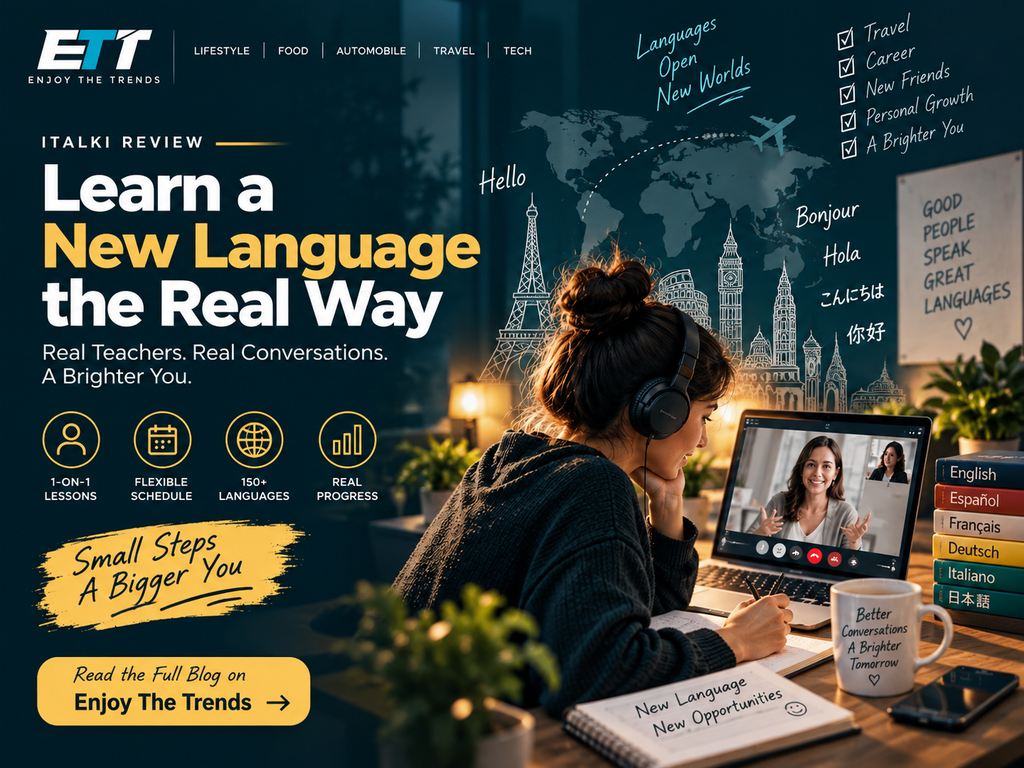
The Teacher You Choose Can Make a Huge Difference
One thing I wouldn’t underestimate is the importance of choosing the right teacher.
Having thousands of teachers to choose from sounds fantastic until you’re actually looking through profiles trying to decide who to book.
One teacher might be focused on conversation. Another might be more structured and grammar-heavy. Someone else might specialize in helping professionals improve their business communication. There are also differences in accents, teaching styles, experience and personality.
The original draft makes an important point here: the large amount of choice is both a strength and a weakness. You have the freedom to find someone who suits you, but that also means you have to spend some time figuring out what you actually need.
I wouldn’t choose a teacher simply because they have the lowest price.
A cheap lesson isn’t automatically good value if you spend the entire class having an unstructured conversation and receive very little useful feedback. On the other hand, paying more doesn’t automatically guarantee a great teacher either.
The better approach is to look at the teacher’s specialization and ask whether it matches your goal.
If you’re preparing for a job interview, find someone who works with professional English. If you’re trying to become more comfortable speaking Spanish, prioritize someone who emphasizes conversation. If you’re preparing for an exam, look for someone familiar with that particular exam.
The more specific your goal is, the easier it becomes to choose intelligently.
How Much Does italki Cost?
This is one area where there isn’t a single answer because italki uses a marketplace model rather than one universal subscription price.
Teachers set their own rates, so the cost can vary depending on the teacher, language, experience, lesson type and duration. The current app listing describes italki as a pay-as-you-go service and says students can either pay for individual classes, use credits or purchase lesson packages.
The current listing also says educators set their own prices, with qualified teachers advertised from below $10 and tutors from below $5, although actual prices can vary.
That model has an obvious advantage: you don’t necessarily have to commit to an expensive long-term course before knowing whether you like the experience.
You can try a teacher, see how the lesson feels and decide whether that person is right for you.
But this is also where people can make a mistake.
Don’t judge a lesson purely by its price.
Imagine spending very little on a lesson where you barely speak and receive no useful corrections. It may be cheaper, but it isn’t necessarily better value than a more expensive lesson where the teacher identifies your weaknesses and gives you something specific to work on.
The cheapest lesson isn’t always the most affordable lesson in the long run.
The Biggest Advantage Is Having Someone to Talk To
For me, this is the strongest argument for using a platform like italki.
A teacher creates a situation where you actually have to use the language.
You can’t simply recognize a word and move on. You have to retrieve it from memory and use it in a sentence. You have to listen to another person and understand what they’re saying. You have to respond, even when you’re not completely sure that your grammar is correct.
That can be uncomfortable at first.
In fact, it can be very uncomfortable.
But that’s not necessarily a bad thing.
Making mistakes while speaking is part of learning. A good teacher can correct those mistakes without turning the entire lesson into an exercise in embarrassment. Over time, expressions that initially required a lot of thought can become much more natural.
The goal isn’t to become perfect before you speak.
The goal is to become better by speaking.
The current italki description specifically emphasizes conversation practice and video-call tutoring with native teachers, which fits this approach
italki Doesn’t Replace Independent Study
This is where I think some language-learning reviews become unrealistic.
Signing up for italki doesn’t magically make you fluent.
If you take one lesson every Sunday and then don’t think about the language for the rest of the week, your progress will probably be slower than you expect.
The tutor can give you guidance, conversation practice and feedback, but you still have to put in the work outside the lesson.
A much better approach is to combine different types of practice.
You could spend part of the week learning vocabulary, listening to native speakers, reading short articles or watching videos. Then use your italki lesson to actually use what you’ve learned.
For example, if you’ve been learning vocabulary related to travel, don’t just memorize the words. Bring them into your lesson and have a conversation about booking hotels, asking for directions or ordering food.
That creates a connection between studying and actually using the language.
It also gives your teacher something specific to work with.
Can italki Replace a Traditional Language Class?
For some people, probably.
For everyone, definitely not.
Traditional classes have their own advantages. Some students learn better when they have a fixed timetable, classmates and a structured curriculum. There is also something useful about being part of a group that is working toward the same goal.
italki takes almost the opposite approach.
You have more control over the teacher, schedule, lesson length and learning objectives. The current app listing says students can select 30-, 45-, 60- or 90-minute lessons and customize learning around their level and priorities.
That makes it particularly appealing to people whose schedules don’t fit neatly into a traditional classroom.
If you’re working full-time, studying at university or simply have an unpredictable schedule, being able to book lessons around your availability can make language learning easier to maintain.
The downside is that flexibility requires discipline.
Nobody is forcing you to attend.
That’s great when you’re busy, but it also means it’s easy to postpone a lesson and tell yourself you’ll do it next week.
What About Language-Learning Apps?
I wouldn’t say you have to choose between an app and italki.
They solve different problems.
A language app is convenient when you have ten minutes to spare. You can practice vocabulary, review previous material and keep yourself familiar with the language without needing another person to be available.
A tutor is useful when you need interaction.
A human teacher can ask an unexpected follow-up question. They can hear hesitation in your voice. They can explain why something sounds unnatural. They can change the direction of the lesson when they realize you’re struggling with a particular concept.
That’s difficult to replicate with a fixed exercise.
The current italki model also extends beyond private lessons through a free community where users can ask questions, practice languages and interact with other learners.
So I wouldn’t throw away your language-learning apps if you’re considering italki.
Use them together.
Use the app for repetition and independent practice, and use your tutor for communication, feedback and accountability.
Who Is italki Best For?
I think italki makes the most sense for people who have a specific reason for learning a language.
If you’re planning to travel, you can focus your lessons around situations you’re likely to encounter. If you’re preparing for an international job interview, you can practice professional conversations. If you’ve studied English for years but still feel nervous speaking it, regular conversation lessons may be more useful than another vocabulary exercise.
It’s also a good option for people who don’t have a conventional schedule.
The platform’s ability to offer different lesson durations and teacher availability makes it easier to fit learning around work, college or other responsibilities.
And there is another group that shouldn’t be overlooked: people who simply learn better through interaction.
Some people genuinely enjoy studying alone.
Others don’t.
If you know that you need another person to keep you engaged, private tutoring can make a big difference.
Who Might Not Need It?
On the other hand, italki isn’t necessarily the right choice for everybody.
If you only want to learn a handful of phrases before a short vacation, paying for regular private lessons may be unnecessary.
Likewise, if you strongly prefer completely structured courses where every lesson is predetermined, the freedom of a teacher marketplace might actually feel like extra work.
And if speaking to strangers makes you extremely uncomfortable, your first few lessons could feel difficult.
That’s not necessarily a reason to avoid it forever, but it is something to understand before spending money.
There is no single perfect way to learn a language.
The best method is the one you can actually stick with.
How I Would Approach italki as a New Learner
If I were starting from scratch, I wouldn’t immediately book a large package of lessons.
I’d start by deciding exactly what I wanted to accomplish.
Instead of saying, “I want to learn English,” I’d make the goal much more specific.
Maybe I want to hold a ten-minute conversation without switching languages. Maybe I want to feel confident during job interviews. Maybe I want to travel through Japan without relying entirely on translation apps.
Once the goal is clear, I’d look for teachers who specifically match it.
I’d compare several profiles rather than choosing the first person I saw. I’d pay attention to teaching style, specialization, availability and reviews. Most importantly, I’d give myself permission to change teachers if the first one wasn’t a good fit.
That’s one of the advantages of a platform with multiple teachers.
You’re not stuck.
My Final Take on italki
After looking at how italki works, I think its biggest strength is also its simplest idea: it gives language learners an opportunity to actually communicate with another person.
The platform currently offers more than 150 languages, private tutoring, flexible lesson durations, teacher selection and a pay-as-you-go model. (Google Play) Those features make it more flexible than a traditional course for many learners, particularly people who have specific goals or unusual schedules.
But I wouldn’t describe it as a shortcut.
There isn’t a magic button that turns a beginner into a fluent speaker.
You still need to study. You still need to practice. You will still forget words, make grammatical mistakes and occasionally sit there trying to remember a sentence you were absolutely certain you knew five minutes earlier.
That’s normal.
What italki can do is give that practice a real purpose.
Instead of only learning what a word means, you get the opportunity to use it. Instead of quietly repeating pronunciation exercises, you have another person listening. Instead of waiting until you’re “ready” to speak, you can start speaking while you’re still learning.
And perhaps that’s the part that matters most.
Learning a language isn’t really about collecting words. It’s about becoming comfortable enough to use them.
For someone who has spent months studying a language but still freezes whenever a real conversation begins, having a real teacher on the other side of the screen could be exactly what’s missing.
So, is italki worth trying?
I wouldn’t say it’s automatically worth it for everyone. But if your main problem is that you understand more than you can actually say, trying a few lessons with the right teacher is a pretty reasonable place to start.
Sometimes you don’t need another language-learning app. You just need someone to talk to.