

There was a time when buying a camera meant walking into a local store, talking to someone behind the counter and hoping they had the model you were looking for. Today, most photographers start their search online. They compare cameras, read reviews, watch videos, check lens compatibility and look at prices before making a decision. The difficult part is no longer finding a camera. It is finding a place where cameras, lenses, lighting, audio equipment, video gear and all the smaller pieces of a creative setup can be considered together.
That is where Adorama has built its reputation. The company has been part of New York City’s creative community since 1974, beginning with a focus on photography before expanding into video, audio, drones, computers, music and other technology. Its online store now covers a much broader range of equipment than the traditional camera-store model.
For someone putting together a first photography kit, upgrading a professional setup or simply exploring a new creative hobby, that range can be useful. At the same time, a large catalog can make shopping more complicated. There are plenty of choices, different brands, new and used equipment, accessories and several ways to get the gear you need.
The real advantage of a retailer like Adorama is not simply having a lot of products. It is being able to build an entire creative setup around the type of work you actually want to do.
Starting With the Camera Is Only the Beginning
A camera is usually the first piece of equipment people think about, but it is rarely the only thing that determines the quality of a finished photograph or video.
A good camera body can produce excellent images, but the lens affects perspective, sharpness and depth of field. Lighting can completely change the mood of a portrait. A reliable memory card matters when shooting important work. A tripod can make a major difference for landscapes, studio photography and long exposures. Even something as simple as a camera bag becomes important once the equipment starts adding up.
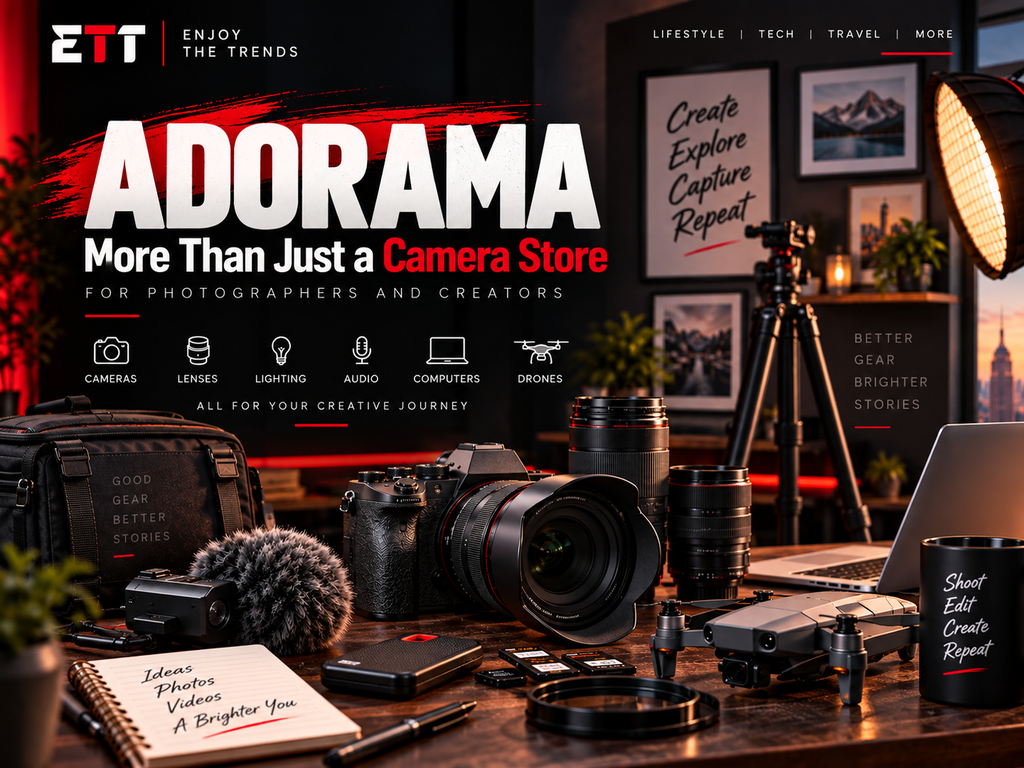
This is one reason the range of products available through Adorama is interesting. The company covers cameras and lenses alongside lighting, tripods and support equipment, audio, video gear, computers and other accessories.
Instead of thinking about the purchase as “I need a camera,” it makes more sense to think about the complete workflow.
A portrait photographer may need a camera, a fast portrait lens, lights, stands, modifiers, memory cards and storage. A travel photographer might prioritize a lightweight camera, versatile zoom lens, spare batteries and a compact bag. Someone creating YouTube videos could need a camera, microphone, lighting, tripod and computer.
The right equipment depends heavily on what you plan to create.
Lenses Can Change the Way You Shoot
One of the most interesting parts of photography equipment is that upgrading the lens can sometimes have a bigger practical impact than replacing the camera body.
A camera body controls the core technology, but the lens determines how the scene is captured. A wide-angle lens can make a small interior feel much larger. A telephoto lens can bring distant subjects closer. A fast prime lens can produce a shallow depth of field that separates a person from the background.
The screenshot of Adorama’s homepage highlights Sigma’s latest lenses, including an 85mm F1.2 DG Art lens and a 20-60mm F2.8-4 DG Contemporary lens. The presentation is a good example of how much attention modern retailers place on lenses as part of the creative process rather than treating them as simple accessories.
For portrait photographers, an 85mm lens is a particularly familiar focal length because it provides a flattering perspective while allowing the photographer to work at a comfortable distance from the subject. A wide-aperture lens can also provide the kind of background separation many portrait photographers want.
A zoom lens serves a different purpose. Instead of physically moving closer or farther away, the photographer can change the focal length to reframe the subject. That flexibility can be valuable for travel, events and everyday photography.
The important lesson is that there is no universally perfect lens. The right choice depends on the photographs you actually take.
Building a Photography Kit Without Buying Everything at Once
One of the easiest mistakes for a new photographer is buying too much equipment too quickly.
Photography stores make it tempting. There are cameras with more features, lenses with wider apertures, different filters, tripods, flashes, bags and countless accessories. It can feel as though a serious photographer needs all of them.
Most beginners do not.
A better approach is to start with a camera and one useful lens. Spend time learning how that combination behaves. Once you understand what limitations you are actually encountering, the next purchase becomes much easier.
For example, someone who starts with a standard zoom may eventually realize that portraits are becoming their main interest. At that point, a fast portrait prime makes sense. Another photographer might discover a passion for wildlife and realize that a longer telephoto lens would be much more useful.
Those purchases are based on experience rather than speculation.
Adorama’s broad selection can be helpful in this situation because it allows photographers to explore different categories as their interests develop. The company also has a used marketplace, giving shoppers another route to equipment without automatically buying everything new. (Adorama)
Why Used Camera Gear Deserves a Closer Look
Buying used photography equipment used to carry a certain amount of uncertainty. A private seller might provide limited information about the condition of a camera or lens, and buyers could have little protection if something went wrong.
A large retailer’s used department can provide a more structured alternative.
Adorama says its used equipment is graded by condition and that used products are backed by a 30-day money-back guarantee, with warranties of up to 180 days depending on the item and its condition.
That does not mean every used item is automatically a better deal than a new one. It means the buyer has another option to consider.
For photographers working with a limited budget, used gear can make higher-end equipment more accessible. A previous-generation camera may still be capable of producing excellent photographs even though newer models have arrived.
The same applies to lenses. Good lenses can remain useful for many years, and older models can sometimes offer excellent optical performance without the price of the newest release.
The key is to compare the condition, warranty, specifications and actual savings rather than buying used simply because the price is lower.
Trading Old Gear Can Make Upgrading Easier
Photography equipment has another interesting characteristic: people upgrade frequently.
A photographer might begin with an entry-level camera and eventually move to a more advanced body. A videographer may change systems. Someone who started with a DSLR may eventually move to mirrorless. Lenses can also become unnecessary as shooting styles change.
Keeping every old piece of equipment is not always practical.
Adorama has a trade-in and used-equipment program that allows customers to submit photography and video equipment for evaluation. According to the company, accepted equipment can be exchanged for payment or store credit, and it offers a free insured shipping process for eligible trade-ins. (Adorama)
That creates an interesting cycle for photographers. Instead of allowing unused equipment to sit in a cupboard, an old camera or lens can potentially contribute toward the next purchase.
It is still worth comparing the offered value with what the equipment could bring through other selling options. Convenience has value, but so does getting a strong price for equipment you no longer need.
Lighting Is Often the Missing Piece
People tend to focus heavily on camera specifications because they are easy to compare. Sensor size, megapixels, autofocus systems and video resolutions all appear on product pages.
Lighting is different.
Good lighting can make an ordinary camera setup look significantly better. Poor lighting can make expensive equipment struggle.
This is particularly obvious in portrait photography and video production. A controlled light source can shape a face, separate a subject from the background and create a much more intentional image.
Adorama carries lighting and studio equipment alongside cameras and lenses, including equipment intended for both location and studio work.
For someone building a small home studio, this can be more important than immediately upgrading to a more expensive camera.
A basic camera paired with thoughtful lighting can often produce more controlled results than a premium camera used in poor light.
That is an important consideration for beginners who are trying to decide where their next dollar should go.
Photography and Video Are Becoming More Connected
The distinction between photographers and videographers is becoming less obvious.
Modern mirrorless cameras are often used for both still photography and video. Content creators may shoot photographs for social media, record interviews, make short videos and produce longer-form content using the same basic camera system.
That means the supporting equipment becomes increasingly important.
Audio is one example. A viewer may forgive slightly imperfect video, but poor audio can make a production difficult to watch. A microphone, headphones and appropriate recording equipment can therefore be just as important as the camera.
Computers are another part of the workflow. High-resolution photographs and modern video files require storage, processing power and backup solutions.
Adorama’s catalog extends beyond photography into video, audio and computers, which makes the retailer relevant to creators who work across several formats rather than staying within one category.
The Advantage of Having Different Creative Categories Together
There is something convenient about being able to move from cameras to lenses, then to lighting, audio and computer equipment without changing retailers.
It becomes easier to think about the entire project.
Imagine a small creator preparing to launch a YouTube channel. The camera is only one part of the setup. The creator might also need a microphone, key light, tripod, memory cards, external storage and editing computer.
A photographer preparing for a studio portrait session faces a similar situation. The camera and lens are important, but the lighting, stands, modifiers, background and storage all contribute to the final result.
Adorama’s broad product range is therefore particularly useful for people who are building systems rather than buying isolated products.
That is a different shopping experience from simply looking for the cheapest camera.
Education Matters More Than Another Piece of Gear
There is another side of Adorama that is easy to overlook when browsing the store.
The company also operates educational resources, including its 42West blog and AdoramaTV, which are designed around photography, video and other creative subjects. Adorama describes these resources as part of its effort to educate and inspire creators.
This matters because equipment alone does not make someone a better photographer.
Understanding exposure, composition, lighting and editing will usually have a much bigger long-term effect than constantly replacing equipment.
A photographer who understands how to work with available light can often produce better results with modest equipment than someone who owns an expensive camera but does not understand how to control the scene.
That is why educational content can be a useful complement to a retailer’s product catalog.
Students and New Creators Have Additional Options
The cost of creative equipment can be a serious obstacle for students and people who are just beginning.
Adorama currently offers an EDU program for eligible students and teachers, with special discounts on cameras, electronics and other creative equipment. The company also advertises an additional discount on used items for eligible EDU members.
For someone building their first serious setup, programs like this are worth checking before making a purchase.
The same principle applies to used equipment. A student who cannot justify the cost of a new professional lens might find a suitable pre-owned option more realistic.
The goal should not be owning the newest equipment.
The goal should be having equipment that allows you to create the work you want to make.
Adorama’s Long History Still Matters
The photography industry has changed dramatically since the 1970s.
Film cameras gave way to digital cameras. Digital photography moved toward smartphones and mirrorless systems. Video became easier to produce, and social media turned millions of people into regular content creators.
Adorama has changed along with the industry.
The company says its original store opened in New York City in 1974, and its online store launched in 1998. Over the years, its business expanded beyond photography into video, audio, computers, drones and other creative technology.
That history does not automatically make every product or purchase the right choice.
It does, however, explain why Adorama is positioned as more than an online camera retailer. Its identity has developed around the broader creative community.
Final Thoughts
Adorama is interesting because the company sits somewhere between a traditional camera store and a much larger creative technology retailer.
Its roots are firmly in photography, but the current range goes well beyond cameras. Photographers can find bodies, lenses, lighting and accessories, while videographers and content creators can also explore audio, video equipment and computers. The used marketplace and trade-in services provide additional options for people who want to save money or move old equipment toward a new setup.
The biggest lesson for anyone shopping for creative equipment is not to get distracted by the size of the catalog.
You do not need the most expensive camera.
You do not need ten lenses.
You do not need every accessory that appears in a recommendation list.
You need equipment that matches the work you actually want to create.
That might mean starting with a basic mirrorless camera and one lens. It might mean investing in lighting instead of a new body. It might mean buying a carefully inspected used lens rather than paying full price for a new one. For a video creator, the smartest upgrade might even be a better microphone or computer rather than another camera.
Adorama’s biggest strength is that it gives creators room to make those choices.
Whether you are building your first photography kit, replacing an aging camera, putting together a studio or expanding into video, the important thing is to shop around your creative goals rather than around specifications alone.
The best gear is ultimately the gear that gets used.
And for a photographer or creator who is serious about turning ideas into actual work, having a retailer that can support that process—from the first camera purchase to the next lens, lighting setup, upgrade or trade-in—can make the journey considerably easier.