

There is a point in almost every language-learning journey when things stop feeling easy.
In the beginning, learning a new language can actually be fun. You learn basic greetings, recognize a few familiar words and start feeling like you’re getting somewhere. A language-learning app makes the process even more satisfying because you can complete a short lesson in a few minutes and immediately see some kind of progress.
Then comes the first real conversation.
Suddenly, knowing a few hundred words doesn’t feel like much. You may understand what someone is saying but struggle to produce an answer. You may know the correct grammar but need several seconds to build a sentence. Sometimes you even know exactly what you want to say in your own language and have absolutely no idea how to say it in the language you’re learning.
That gap between studying a language and actually using it is where italki takes a different approach.
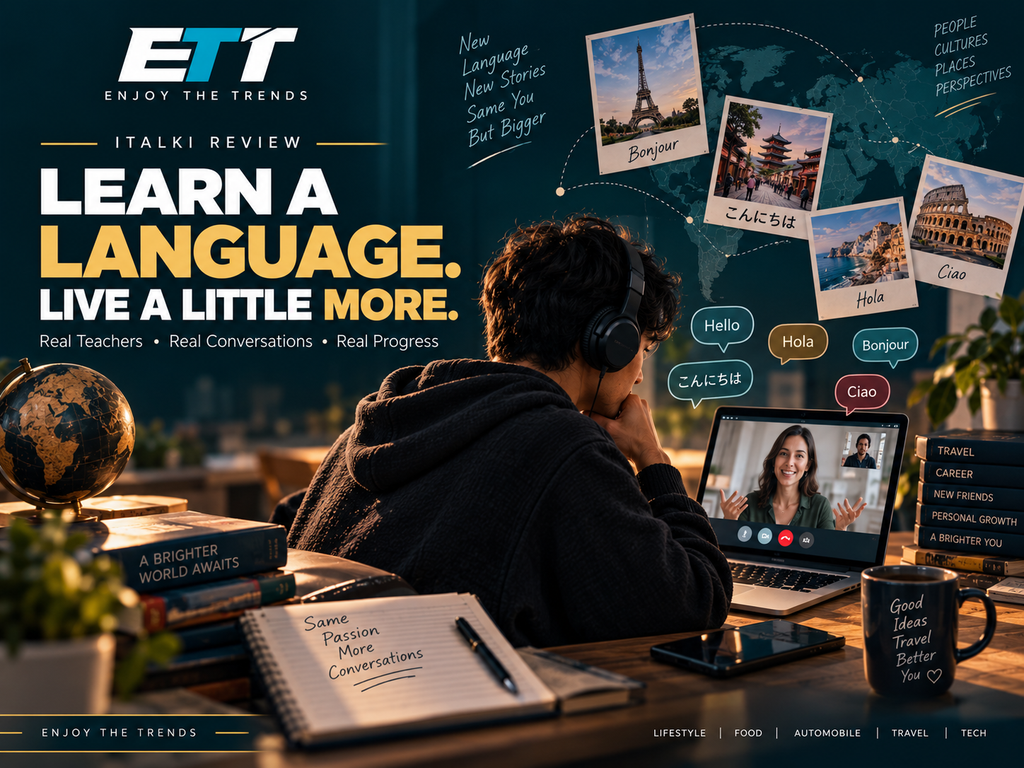
Rather than functioning primarily as a self-paced language course, italki connects learners with individual language teachers for online lessons. Its current app listing says the platform offers more than 150 languages, with teachers who can tailor lessons to different levels and learning goals. Students can choose lesson lengths of 30, 45, 60 or 90 minutes and use italki Classroom or other supported video platforms for lessons.
That sounds straightforward, but the interesting part isn’t really the number of languages or lesson lengths. The interesting part is the decision to put a real person at the center of the learning process.
A Different Way of Thinking About Language Learning
Most language apps are built around a course.
You open the app, follow the lesson, complete the exercises and move to the next section. The structure is convenient because you don’t have to think too much about what to study next. Everything is already organized for you.
That convenience is also the limitation.
A fixed lesson doesn’t know that you are preparing for a job interview next month. It doesn’t know that you are moving to another country. It doesn’t know that you can read English reasonably well but become nervous whenever you have to speak. It also doesn’t know that you’ve already mastered a particular grammar topic and would rather spend your time working on pronunciation.
A human teacher can adjust to those differences.
This is essentially the model behind italki. Instead of choosing a single course and following the same path as everyone else, you browse individual teachers and find someone whose experience and teaching style match what you are trying to accomplish.
The current italki listing says teachers can tailor lessons according to a student’s level, from A1 through C2, while learners can choose areas such as conversation, business, grammar, creative writing and exam preparation.
For someone with a very specific goal, that flexibility can be much more useful than another generic lesson about ordering coffee.
The Real Challenge Is Getting Comfortable With Mistakes
One reason people struggle with speaking is that they become afraid of being wrong.
When you’re studying alone, mistakes are relatively harmless. You can get an exercise wrong, check the answer and try again. Nobody is waiting for you to respond.
A conversation is different.
You have to make decisions quickly. Which word should you use? Is the sentence grammatically correct? Is the pronunciation right? Did the other person understand you? Should you try saying it another way?
That pressure can make even relatively advanced learners hesitate.
A private lesson changes the situation because the conversation itself becomes part of the learning process. You are not waiting until your language is perfect before using it. You are using it while you’re still improving.
A teacher can interrupt when a mistake is important, allow you to finish when the goal is fluency, explain a confusing expression or simply keep the conversation moving. The exact teaching style depends on the person you choose, which is one reason teacher selection matters so much on a marketplace like italki.
A recent independent review of the platform describes italki as a marketplace rather than a single fixed course and points out that the teacher, lesson type, price, schedule and correction style can vary from one profile to another.
That’s both the advantage and the responsibility of the platform.
You get choice, but you have to use that choice properly.
Finding the Right Teacher Is Part of the Experience
Having thousands of teachers available sounds great until you have to choose one.
There is no universal teacher who is perfect for everyone.
Someone preparing for a language exam may want a completely different teacher from someone who simply wants casual conversation. A business professional may care more about terminology and presentation skills, while a traveler might want practical conversations that could happen in airports, hotels and restaurants.
Even two teachers who specialize in the same language can have completely different approaches.
One might correct almost every mistake. Another might let you speak freely and save corrections until the end. One may prepare structured lessons. Another might build the class around conversation.
Neither approach is automatically better.
It depends on what you’re trying to improve.
This is why I would treat the teacher search as part of the learning process rather than something to rush through. Look at the profile, read the description, check availability and think about whether the teacher’s specialization matches your goal.
A recent review of italki makes the same broader point: because teachers control their own schedules, pricing and lesson structures, the quality of the experience depends heavily on finding the right individual match.
The platform can provide the marketplace.
It cannot choose the perfect teacher for you.
Flexibility Is One of italki’s Biggest Strengths
Traditional language classes usually operate on someone else’s schedule.
Tuesday at 6 PM. Thursday at 6 PM. Same classroom. Same timetable.
That works perfectly for some people.
For others, it doesn’t work at all.
Maybe you work late. Maybe you’re at university. Maybe your schedule changes every week. Maybe you simply don’t want to commit to a course that requires you to be available at the same time for several months.
italki’s lesson model gives learners more control.
The current app listing says lessons can be booked in 30-, 45-, 60- or 90-minute formats, allowing students to select a duration that fits their schedule. (Google Play)
That may sound like a small feature, but it can make a difference in consistency.
A 30-minute conversation might be realistic on a busy weekday when a two-hour classroom session would never happen. On a weekend, someone might prefer a longer lesson with more time for conversation and detailed feedback.
The best learning schedule is often the one you can actually maintain.
But Too Much Flexibility Can Become a Problem
There is a downside to having complete control.
Nobody is going to force you to study.
If you miss a scheduled classroom course, you know that the class continued without you. With a flexible tutoring platform, it can be very easy to tell yourself you’ll book another lesson next week.
Then next week becomes the week after.
Eventually, the language starts slipping out of your routine.
This is an important point because flexibility is only useful when it supports consistency.
A platform can make scheduling easier, but it cannot provide motivation on your behalf.
If you’re serious about improving, it helps to create your own routine. It doesn’t need to be complicated. One or two lessons a week combined with regular independent practice can be much more useful than booking several lessons in one week and then disappearing for a month.
The Pricing Model Makes Comparison Important
Another difference with italki is that there isn’t one universal lesson price.
Teachers set their own rates, which means the cost varies depending on the teacher, language, lesson type and duration. Current independent reviews describe the platform as a pay-per-lesson marketplace rather than a traditional fixed-price course. (Online Courseing)
That gives learners a useful degree of control.
You can look for someone within your budget instead of paying one fixed price for access to an entire course.
But this is where it is important not to make price the only deciding factor.
A cheaper teacher isn’t necessarily better value.
Imagine paying for a very inexpensive lesson where you spend most of the time casually chatting and receive little feedback. Compare that with a slightly more expensive lesson where the teacher identifies your weaknesses, prepares useful material and gives you specific things to practice between classes.
The second lesson could produce more progress even though it costs more.
The smarter question isn’t simply, “How cheap is the lesson?”
It’s, “What am I getting from the lesson?”
What You Do Before the Lesson Matters
One of the easiest ways to waste a tutoring session is to arrive without a goal.
You spend a few minutes saying hello, talk about your weekend, discuss the weather and eventually realize that most of the lesson has disappeared.
Casual conversation has value, especially when you’re trying to become more comfortable speaking. But if you’re paying for a private lesson, you can make that time much more useful by giving it some direction.
Before the lesson, think about what you want to practice.
Maybe you have trouble using past tense naturally. Maybe you repeatedly make mistakes with pronunciation. Maybe you need to practice explaining your work in English. Maybe you are preparing for an upcoming trip.
Tell your teacher.
The more information the teacher has, the easier it becomes to create a useful lesson.
The current italki description emphasizes lessons tailored to a student’s needs and weaknesses, which makes this kind of communication particularly important.
You don’t have to turn every lesson into a formal classroom.
You just need to know what you’re trying to improve.
Why Conversation Practice Feels Different From App Exercises
There is a reason language apps can make you feel like you’re progressing quickly while real conversations still feel difficult.
Exercises are predictable.
Conversations aren’t.
An app may show you four possible answers. A real person won’t.
An exercise may ask you to translate one sentence. A conversation may suddenly move from work to travel to food to a personal story without warning.
That unpredictability forces you to become more flexible with the language.
This is where one-to-one tutoring can be particularly useful.
A teacher can change the subject, ask follow-up questions, challenge you to explain something differently or deliberately introduce vocabulary you have been avoiding.
The current italki app description specifically highlights conversation practice and video tutoring with native teachers as part of the platform’s learning experience.
That doesn’t make traditional language apps useless.
It simply means they serve different purposes.
I Wouldn’t Abandon Language Apps Completely
If you already use an app to learn vocabulary, there is no reason to throw it away just because you’re considering italki.
In fact, combining the two approaches can make more sense.
Use an app when you have a few spare minutes. Review vocabulary while commuting. Listen to podcasts while walking. Read something short before bed.
Then use your tutoring sessions for the part that requires another human being.
Speaking.
Listening.
Explaining.
Asking questions.
Getting corrected.
Trying again.
That combination can be more practical than expecting one resource to handle every aspect of language learning.
italki Can Be Especially Useful for Specific Goals
One of the strongest reasons to consider individual tutoring is that language learning rarely has one universal objective.
A person learning Spanish for travel doesn’t need exactly the same lessons as someone learning Spanish for business.
Someone studying Japanese because they enjoy anime and Japanese culture may have completely different priorities from someone preparing to work in Japan.
A professional preparing for an international interview might want to practice answering questions under pressure. A student preparing for an exam might need grammar and writing feedback.
The current italki listing includes areas such as conversation, business, grammar, creative writing and exam preparation, which reflects this broader range of goals.
That’s where a flexible teacher marketplace makes sense.
You aren’t buying a generic idea of language learning.
You’re paying for time with someone who can work on the particular skill you need.
The Platform Is Not a Substitute for Effort
This deserves to be said clearly because language-learning marketing can sometimes make things sound easier than they are.
No platform is going to make you fluent simply because you signed up.
A teacher can explain something ten different ways, but you still need to remember it.
A tutor can correct your pronunciation, but you still need to practice it.
A teacher can give you conversation practice, but you still need to develop the habit of listening and speaking outside the lesson.
italki can create a useful environment for learning, but the learner still controls the amount of effort going into that environment.
That’s actually true of almost every learning system.
The tool matters.
The person using the tool matters more.
Who Would Probably Get the Most From italki?
I think the platform makes the most sense for learners who already know what they want to improve.
Someone who has been studying English for years but still feels uncomfortable speaking could benefit from regular conversation practice.
A traveler could use lessons to prepare for situations they are likely to encounter abroad.
A professional could focus on business communication.
A student could work toward an exam.
An advanced learner could use lessons to maintain fluency rather than starting another beginner course.
It can also make sense for people who struggle with traditional schedules. Being able to choose different lesson durations and work around teacher availability gives learners more control over when they study.
Who Might Be Better Off With Something Else?
There are also situations where italki may not be the best choice.
If you want a completely structured course that tells you exactly what to study every day, a traditional language-learning app may feel easier.
If you don’t want to interact with a teacher, tutoring obviously isn’t going to be a good fit.
If your goal is simply to learn a few phrases for a short holiday, regular private lessons may be more than you need.
And if you have no intention of practicing between lessons, don’t expect a tutor to carry your entire learning journey.
A recent independent review describes this trade-off well: italki is particularly suited to learners who value live interaction and personalized feedback, but its flexibility also means the learner has to take more responsibility for planning and consistency.
That’s probably the fairest way to look at the platform.
The Human Element Is Still the Most Interesting Part
There is something worth considering as AI becomes increasingly common in language learning.
You can now practice conversations with software, receive instant corrections and generate exercises almost instantly.
That is genuinely useful.
But a human teacher brings a different kind of interaction.
A teacher has personal experience with the language. They can explain cultural context, understand why a phrase sounds strange even when it is technically correct and adapt the conversation based on your reactions.
They can also challenge you in ways that aren’t necessarily obvious from an exercise.
If you’re nervous, they can slow down.
If you’re doing well, they can make the conversation harder.
If you’re making the same mistake repeatedly, they can stop and focus on it.
That human adjustment is one of the strongest reasons live tutoring continues to have a place alongside automated language tools.
A recent review from VICE similarly describes italki’s major difference from conventional language apps as its emphasis on connecting learners with actual human teachers and unscripted conversation.
How to Get More Value From a Lesson
You don’t need a complicated system to make your lessons productive.
Start with one clear objective.
During the lesson, speak as much as possible. Don’t worry about making mistakes. If you don’t understand something, ask the teacher to explain it differently.
Write down corrections that keep appearing.
After the lesson, spend a few minutes reviewing them.
Then try to use those corrections again during your next conversation.
This creates a simple cycle: practice, feedback, review, repeat.
Over time, that can be much more valuable than simply collecting completed lessons.
The number of lessons you’ve taken isn’t the real measurement of progress.
What matters is what you can do now that you couldn’t do before.
A More Realistic Way to Think About Language Progress
Language learning is rarely a straight line.
Some weeks you’ll feel like you’re improving quickly. Other weeks you’ll feel like you’ve forgotten everything.
You may suddenly understand a conversation that would have sounded impossible a few months earlier. Then you’ll encounter a completely unfamiliar accent and feel like you’re back at the beginning.
That’s normal.
One reason speaking with a teacher can help is that progress becomes more visible when someone regularly interacts with you.
You might notice that you’re answering faster.
You’re using fewer filler words.
You’re no longer translating every sentence.
You’re asking follow-up questions instead of simply responding.
You’re making fewer of the same mistakes.
Those changes can be difficult to notice when you’re studying alone.
The Bottom Line on italki
italki isn’t a magic solution to language learning, and it isn’t necessarily better than every language app or traditional course.
Its strength is much more specific.
It gives learners access to individual teachers and lets them shape lessons around their own goals, schedule and level. The platform currently advertises more than 150 languages, multiple lesson lengths and teaching options that cover everything from conversation to business, grammar and exam preparation.
That makes it particularly interesting for people who have reached the point where simply completing another exercise isn’t enough.
If you can recognize the language but can’t comfortably speak it, regular interaction with a teacher could fill an important gap.
If you’re preparing for something specific, such as an interview, exam or international move, the ability to choose a teacher around that goal can be useful.
And if you simply learn better when another person is involved, the format may suit you naturally.
The trade-off is that you have to take responsibility for choosing the right teacher, creating a consistent routine and making good use of your lessons. Recent independent reviews repeatedly identify that flexibility as both italki’s major advantage and one of its main challenges.
In the end, learning a language isn’t really about how many lessons you’ve completed or how long your study streak is.
It’s about what happens when someone actually speaks to you.
Can you understand them?
Can you respond without translating every word?
Can you explain what you mean when you don’t know the exact vocabulary?
Can you keep the conversation going?
That’s the real test.
And that is where a platform built around speaking with real teachers has a very practical advantage.
You don’t need to wait until you’re fluent to start speaking. You become better at speaking by actually doing it.
For learners who have spent months studying a language but still feel stuck when it’s time for a real conversation, that may be the most useful thing italki has to offer.